

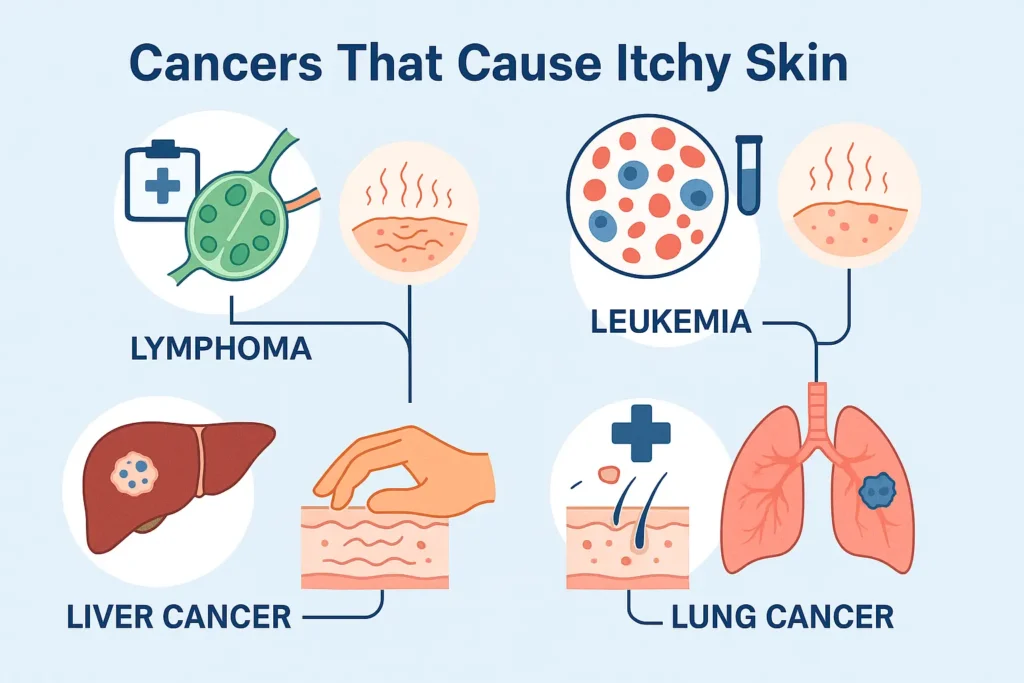
Yes, certain types of cancer can cause persistent itchy skin (pruritus), but itching alone is rarely a sign of cancer. Most cases are caused by common conditions such as dry skin, allergies, eczema, infections, or medication side effects. However, cancers including Hodgkin lymphoma, non-Hodgkin lymphoma, leukemia, liver cancer, pancreatic cancer, bile duct cancer, gallbladder cancer, and some skin cancers may be associated with persistent or unexplained itching.
If itching lasts for several weeks without an obvious cause or occurs alongside symptoms such as unexplained weight loss, swollen lymph nodes, jaundice, night sweats, or persistent fatigue, it is important to consult a healthcare professional for a proper evaluation. Early diagnosis helps identify the underlying cause and ensures timely treatment.
Key Takeaways - (Cancer Can Cause Itchy Skin?)
- Persistent itchy skin is usually not caused by cancer.
- Hodgkin lymphoma has one of the strongest links to unexplained generalized itching.
- Liver, pancreatic, gallbladder, and bile duct cancers may cause itching by blocking the normal flow of bile.
- Some blood cancers and skin cancers can also be associated with persistent itching.
- If itching continues for more than 2–4 weeks or occurs with other warning signs, seek medical advice rather than self-diagnosing.
What Is Itchy Skin (Pruritus)?
Itchy skin, medically known as pruritus, is an uncomfortable sensation that creates the urge to scratch. It can affect a small area of the body or become widespread, and it may occur with or without a visible rash. While occasional itching is common and usually harmless, persistent or unexplained itching deserves medical attention, especially when it does not improve with routine skin care.
Pruritus can affect people of all ages and may interfere with sleep, work, and daily activities when it becomes severe or long-lasting. In many cases, the skin appears completely normal despite intense itching.
Common Causes of Itchy Skin
Most cases of itchy skin are related to non-cancerous conditions, including:
- Dry skin (xerosis)
- Allergic reactions
- Eczema (atopic dermatitis)
- Psoriasis
- Fungal infections
- Insect bites
- Medication side effects
- Kidney disease
- Liver disease
- Thyroid disorders
- Diabetes
- Pregnancy-related skin changes
Because itching has many possible causes, it is important not to assume it is related to cancer. A healthcare professional can determine the underlying cause based on your symptoms, medical history, and diagnostic tests.
Can Cancer Cause Itchy Skin?
Yes, some cancers can cause itchy skin, but this is an uncommon symptom compared with more common causes such as dry skin or allergies.
Cancer-related itching, also called paraneoplastic pruritus, may occur when the disease triggers changes within the immune system, affects liver function, or releases substances that stimulate nerve endings in the skin. In some cancers, itching develops before the diagnosis is made, while in others it may occur as the disease progresses or as a side effect of cancer treatment.
It’s important to remember that itching alone is not enough to diagnose cancer. Most people with persistent itching do not have cancer. However, when itching has no clear cause or is accompanied by other concerning symptoms, medical evaluation is recommended.
How Can Cancer Cause Itchy Skin?
Different cancers can lead to itching in different ways. Understanding these mechanisms helps explain why some people experience persistent itching even when there is no obvious skin problem.
1. Immune System Changes
Certain cancers, particularly Hodgkin lymphoma, non-Hodgkin lymphoma, and leukemia, can alter the body’s immune response. These changes may lead to the release of inflammatory proteins, known as cytokines, which stimulate nerve endings in the skin and cause generalized itching.
In many cases, the itching occurs without a rash and may develop before other symptoms become noticeable.
2. Bile Salt Accumulation
Cancers involving the liver, pancreas, gallbladder, or bile ducts can obstruct the normal flow of bile. As bile salts build up in the bloodstream, they may accumulate in the skin and cause intense itching.
This type of itching often:
- Occurs without a rash
- Is worse at night
- May begin on the palms of the hands and soles of the feet
- Is often accompanied by jaundice (yellowing of the skin and eyes)
3. Direct Involvement of the Skin
Some cancers develop within or spread to the skin itself. These include certain forms of skin cancer and cutaneous T-cell lymphoma.
Unlike generalized itching, these conditions usually cause itching in one specific area and may also produce:
- Persistent redness
- A changing mole
- A non-healing sore
- Thickened or scaly skin
- Raised bumps or patches
Any skin lesion that continues to itch, bleed, or change in appearance should be examined by a healthcare professional.
4. Side Effects of Cancer Treatment
Not all cancer-related itching is caused by the cancer itself. Some people develop itchy skin as a side effect of treatments such as:
- Chemotherapy
- Radiation therapy
- Immunotherapy
- Targeted therapy
These treatments may cause skin dryness, inflammation, or increased sensitivity, resulting in temporary or persistent itching. Your healthcare team can recommend appropriate medications and skincare measures to help manage these side effects.
Is Itchy Skin Alone Enough to Suspect Cancer?
No. Persistent itching by itself is rarely a sign of cancer.
Most people with chronic itching have conditions such as dry skin, eczema, allergies, medication reactions, thyroid disorders, diabetes, liver disease, or kidney disease. Doctors usually investigate these more common causes before considering cancer.
Healthcare professionals become more concerned when persistent itching occurs along with other symptoms, such as:
- Swollen lymph nodes
- Unexplained weight loss
- Night sweats
- Persistent fever
- Yellowing of the skin or eyes (jaundice)
- Ongoing fatigue
- A changing mole or a non-healing skin lesion
The presence of one or more of these symptoms does not necessarily mean cancer, but it does warrant a thorough medical evaluation.
Types of Cancer That Can Cause Itchy Skin
While persistent itching is rarely caused by cancer, some cancers are more commonly associated with chronic or unexplained pruritus than others. In some cases, itching may develop before the cancer is diagnosed, while in others it may occur during treatment or as the disease progresses.
The following cancers have the strongest known association with persistent itching.
1. Hodgkin Lymphoma
Hodgkin lymphoma is one of the cancers most strongly linked to persistent itching. Research suggests that approximately 20–30% of people with Hodgkin lymphoma experience generalized itching at some point during the disease, and for some, it may appear months before other symptoms become noticeable.
Unlike itching caused by allergies or eczema, the skin often looks completely normal. The itching is usually widespread, persistent, and may become more intense at night.
Why does Hodgkin lymphoma cause itching?
Although the exact cause is not fully understood, researchers believe that immune cells release inflammatory chemicals (cytokines) that stimulate nerve endings in the skin, leading to persistent itching.
Other symptoms of Hodgkin lymphoma
Besides itching, people may also experience:
- Painless swelling of lymph nodes in the neck, armpit, or groin
- Persistent fatigue
- Unexplained fever
- Night sweats
- Unintentional weight loss
- Loss of appetite
Important: Persistent itching alone does not indicate Hodgkin lymphoma. However, if it occurs together with enlarged lymph nodes or other symptoms, medical evaluation is recommended.
2. Non-Hodgkin Lymphoma
Non-Hodgkin lymphoma (NHL) is another cancer of the lymphatic system that may cause generalized itching.
The itching is thought to result from immune system changes and inflammatory substances released by lymphoma cells. It may affect the entire body or occur in specific areas and often develops without a visible rash.
Other possible symptoms include:
- Enlarged lymph nodes
- Persistent tiredness
- Fever
- Night sweats
- Frequent infections
- Unexplained weight loss
Because these symptoms can also occur in many non-cancerous illnesses, doctors usually confirm the diagnosis through blood tests, imaging studies, and a lymph node biopsy when necessary.
3. Leukemia
Leukemia is a cancer of the blood and bone marrow. Certain types, particularly chronic lymphocytic leukemia (CLL), may occasionally cause persistent itching.
Unlike lymphoma, itching is less common in leukemia and is usually not the first symptom. It may occur because of immune system changes, inflammation, or skin involvement related to the disease.
Other symptoms of leukemia include:
- Persistent fatigue
- Frequent infections
- Easy bruising or bleeding
- Pale skin caused by anemia
- Bone or joint pain
- Fever
- Swollen lymph nodes
Although itching can occur, leukemia is far more likely to present with blood-related symptoms than with itching alone.
4. Liver Cancer
The liver produces bile, which helps digest fats. Liver cancer can interfere with the normal flow of bile, causing bile salts to build up in the bloodstream. This buildup may lead to generalized itching, sometimes before other symptoms become obvious.
People often describe this itching as deep, persistent, and difficult to relieve with moisturizers or antihistamines.
Other symptoms may include:
- Yellowing of the skin and eyes (jaundice)
- Dark urine
- Pale or clay-colored stools
- Pain or discomfort in the upper right abdomen
- Loss of appetite
- Unexplained weight loss
- Nausea
If persistent itching develops together with jaundice, prompt medical evaluation is important because bile duct obstruction requires timely diagnosis.
5. Pancreatic Cancer
Although pancreatic cancer is not a common cause of itching, it may occur when a tumor blocks the bile duct.
As bile cannot drain normally, bile salts accumulate beneath the skin and trigger widespread itching. In some individuals, itching develops before abdominal pain becomes noticeable.
Other symptoms may include:
- Jaundice
- Dark urine
- Pale stools
- Pain in the upper abdomen or back
- Unexplained weight loss
- Loss of appetite
- Nausea
Persistent itching combined with jaundice should always be assessed by a healthcare professional.
6. Gallbladder and Bile Duct Cancers
Cancers affecting the gallbladder or bile ducts (cholangiocarcinoma) can also obstruct the flow of bile, leading to itching.
This type of itching is similar to that seen in liver or pancreatic cancers and often occurs before the diagnosis is confirmed.
Other symptoms may include:
- Yellowing of the skin and eyes
- Dark urine
- Pale stools
- Pain in the upper right side of the abdomen
- Fever
- Loss of appetite
- Unexplained weight loss
Because these symptoms may indicate bile duct obstruction, early medical assessment is essential.
7. Kidney Cancer
The connection between kidney cancer and itchy skin is much less common than with lymphoma or cancers affecting the liver and bile ducts.
In rare cases, kidney cancer may cause generalized itching through paraneoplastic syndromes or metabolic changes associated with the disease. However, persistent itching alone is not considered a typical symptom of kidney cancer.
More common symptoms include:
- Blood in the urine
- Persistent pain in the side or lower back
- A lump in the abdomen or side
- Fatigue
- Unexplained weight loss
- Fever
Doctors generally investigate more common causes of persistent itching before considering kidney cancer.
8. Skin Cancer
Some types of skin cancer can cause localized itching, although many skin cancers are painless and do not itch in their early stages.
Skin cancers that may be associated with itching include:
- Melanoma
- Basal cell carcinoma
- Squamous cell carcinoma
- Cutaneous T-cell lymphoma
Unlike blood cancers, the itching usually occurs around a visible skin lesion rather than affecting the entire body.
You should have a skin lesion examined if you notice:
- A mole changing in size, shape, or color
- Persistent itching in one specific spot
- A sore that does not heal
- Bleeding or crusting
- A rough or scaly patch
- A new or changing skin growth
Early evaluation by a healthcare professional can help determine whether the lesion is cancerous or due to another skin condition.
Can Cancer Treatment Also Cause Itchy Skin?
Yes. Not all itching experienced by people with cancer is caused by the cancer itself. Some cancer treatments can affect the skin and lead to temporary or persistent itching.
These treatments include:
Chemotherapy
Chemotherapy may damage rapidly dividing skin cells, leading to dryness, increased sensitivity, and itching.
Radiation Therapy
Radiation can cause redness, dryness, peeling, and itching in the treated area. These symptoms often improve gradually after treatment ends.
Immunotherapy
Immunotherapy works by stimulating the immune system. In some people, this may lead to skin-related side effects such as itching, rashes, or inflammation.
Targeted Therapy
Certain targeted cancer drugs may alter skin function and contribute to dryness, irritation, or persistent itching.
Most treatment-related itching can be managed with appropriate skin care, moisturizers, prescription medications, or adjustments to treatment under medical supervision.
Summary
Although several cancers can cause persistent itching, they account for only a small proportion of all cases of chronic pruritus. Among the cancers discussed, Hodgkin lymphoma has the strongest association with unexplained generalized itching, while cancers affecting the liver, pancreas, gallbladder, and bile ducts often cause itching because of bile salt accumulation. Kidney cancer is only rarely linked to itching, and skin cancers typically cause itching around a specific skin lesion rather than across the entire body.
Is Itchy Skin Alone a Sign of Cancer?
No. Persistent itchy skin alone is rarely a sign of cancer.
In fact, most people with chronic itching do not have cancer. Common conditions such as dry skin, eczema, allergies, medication side effects, thyroid disorders, diabetes, liver disease, and kidney disease are far more likely to be responsible.
Healthcare professionals usually investigate these more common causes first. Cancer becomes a greater concern only when persistent itching is unexplained, does not improve with treatment, or occurs alongside other concerning symptoms.
If your itching lasts for more than 2–4 weeks, has no obvious cause, or is accompanied by other warning signs, it’s important to seek medical advice rather than self-diagnosing.
What Does Cancer-Related Itching Feel Like?
Cancer-related itching (paraneoplastic pruritus) does not have one specific pattern, but there are some characteristics that may distinguish it from ordinary itching.
Unlike itching caused by insect bites, eczema, or allergies, cancer-related itching often persists despite using moisturizers or over-the-counter anti-itch medications. In many cases, the skin appears completely normal, making the underlying cause more difficult to identify.
Cancer-Related Itching May:
- Last for several weeks or longer
- Occur without a visible rash
- Affect the entire body or large areas of skin
- Be more noticeable at night
- Return repeatedly without an obvious trigger
- Feel intense enough to interfere with sleep or daily activities
- Be associated with a burning, tingling, or crawling sensation in some people
These features do not confirm cancer, but they may indicate the need for a medical evaluation—especially if other symptoms are present.
Symptoms That May Occur Alongside Cancer-Related Itching
Persistent itching is more concerning when it occurs together with other unexplained symptoms. While these symptoms can be caused by many different medical conditions, they help doctors decide whether further investigation is necessary.
Symptom | Possible Association |
Swollen lymph nodes | Hodgkin lymphoma, Non-Hodgkin lymphoma |
Unexplained weight loss | Various cancers and chronic illnesses |
Persistent fatigue | Leukemia, lymphoma, anemia, other medical conditions |
Night sweats | Hodgkin lymphoma and certain blood cancers |
Fever without infection | Blood cancers or other systemic illnesses |
Yellowing of the skin or eyes (jaundice) | Liver, pancreatic, gallbladder, or bile duct diseases |
Persistent abdominal pain | Liver or pancreatic disorders |
A changing mole or non-healing skin lesion | Skin cancer |
Having one or more of these symptoms does not necessarily mean cancer, but they should be evaluated by a qualified healthcare professional.
When Should You See a Doctor for Persistent Itching?
Most itching improves with simple skin care or treatment of the underlying condition. However, you should consult a healthcare provider if your itching:
- Lasts longer than 2–4 weeks
- Has no obvious cause
- Does not improve with moisturizers or prescribed treatment
- Keeps you awake at night or affects your daily activities
- Occurs with unexplained weight loss or fatigue
- Is accompanied by swollen lymph nodes
- Develops alongside jaundice
- Is associated with a changing mole or a sore that does not heal
Early evaluation can help identify the underlying cause and allow treatment to begin sooner if needed.
Other Conditions That Can Cause Persistent Itchy Skin
Although many people search “Can cancer cause itchy skin?”, it is important to remember that non-cancerous conditions account for the vast majority of chronic itching cases.
Some of the most common causes include:
Dry Skin (Xerosis)
Dry skin is one of the leading causes of itching, particularly during winter, in older adults, or after frequent hot showers. Regular use of fragrance-free moisturizers often provides relief.
Allergic Reactions
Allergies to foods, medications, cosmetics, soaps, or environmental allergens can cause itching with or without a rash.
Eczema (Atopic Dermatitis)
Eczema is a chronic inflammatory skin condition that causes dry, red, and itchy patches. Symptoms often come and go over time.
Psoriasis
Psoriasis is an autoimmune condition that produces thick, scaly plaques, commonly affecting the elbows, knees, scalp, and lower back. These patches may become intensely itchy.
Fungal Infections
Common fungal infections such as ringworm and athlete’s foot often cause localized itching, redness, and irritation.
Liver Disease
Conditions such as hepatitis, cirrhosis, and cholestatic liver diseases can cause bile salts to accumulate beneath the skin, resulting in generalized itching—even without cancer.
Kidney Disease
People with advanced chronic kidney disease sometimes develop persistent itching because waste products build up in the bloodstream.
Thyroid Disorders
Both hypothyroidism and hyperthyroidism can affect the skin and contribute to chronic itching.
Diabetes
High blood sugar levels can lead to dry skin, poor circulation, or fungal infections, all of which may contribute to itching.
Medication Side Effects
Certain medications, including some antibiotics, blood pressure medicines, pain relievers, and opioid medications, may cause itching as a side effect.
Anxiety and Stress
Emotional stress can worsen existing skin conditions or increase skin sensitivity, making itching more noticeable in some individuals.
How Do Doctors Diagnose the Cause of Persistent Itching?
Because itching has many possible causes, doctors follow a systematic approach to determine the underlying reason rather than assuming it is related to cancer.
Medical History
Your healthcare provider will ask questions about:
- When the itching began
- Whether it affects one area or the entire body
- Any associated symptoms
- Recent medications
- Existing medical conditions
- Family history of relevant illnesses
Physical Examination
A thorough examination helps identify:
- Skin rashes or lesions
- Enlarged lymph nodes
- Signs of jaundice
- Changes in moles or skin growths
- Other clues that may indicate an underlying medical condition
Blood Tests
Depending on your symptoms, your doctor may recommend blood tests such as:
- Complete Blood Count (CBC)
- Liver Function Tests (LFTs)
- Kidney Function Tests (KFTs)
- Blood glucose testing
- Thyroid function tests
- Inflammatory markers, when appropriate
These tests can help identify infections, blood disorders, liver or kidney disease, diabetes, thyroid disorders, or other medical conditions.
Imaging Tests
If an internal cause is suspected, imaging studies may be recommended, including:
- Ultrasound
- CT scan
- MRI scan
- PET scan (when clinically indicated)
These tests allow doctors to examine organs such as the liver, pancreas, kidneys, and lymph nodes in greater detail.
Biopsy
If a suspicious mole, skin lesion, enlarged lymph node, or abnormal tissue is found, a biopsy may be performed. This involves examining a small sample of tissue under a microscope to confirm or rule out cancer or other diseases.
Early Evaluation Leads to Better Outcomes
Persistent itching does not automatically mean cancer, but it also should not be ignored when it continues without an obvious cause or occurs with other unexplained symptoms.
A timely medical evaluation can identify the underlying condition—whether it is a common skin disorder, a chronic medical illness, or, in rare cases, cancer. Early diagnosis allows appropriate treatment to begin sooner and can improve overall health outcomes.
Treatment for Cancer-Related Itchy Skin
The most effective way to relieve cancer-related itchy skin (pruritus) is to identify and treat the underlying cause. If itching is related to cancer, managing the cancer itself often helps improve the symptom. At the same time, supportive treatments and good skin care can reduce discomfort and improve quality of life.
Treatment varies depending on the type of cancer, the severity of itching, and the person’s overall health.
Treating the Underlying Cancer
When itching is caused by cancer, treatment focuses on the underlying disease. Depending on the diagnosis and stage of cancer, your healthcare team may recommend:
- Surgery
- Chemotherapy
- Radiation therapy
- Immunotherapy
- Targeted therapy
- Hormone therapy (for certain cancers)
As the underlying condition improves, cancer-related itching often becomes less severe. Your oncologist will recommend the most appropriate treatment based on your diagnosis and overall health.
Medications to Relieve Itching
Doctors may recommend medications to reduce itching while the underlying cause is being treated.
Depending on the cause and severity, treatment may include:
- Fragrance-free moisturizers and emollients to restore the skin barrier and reduce dryness.
- Antihistamines, particularly when allergies are contributing to itching.
- Topical corticosteroids for inflammatory skin conditions when clinically appropriate.
- Prescription medications for persistent itching that does not respond to basic treatments.
The choice of medication depends on the underlying cause, so avoid self-medicating without medical advice.
Self-Care Tips to Manage Persistent Itching
Simple lifestyle changes can help reduce skin irritation and make itching more manageable.
Keep Your Skin Moisturized
Apply a fragrance-free moisturizer immediately after bathing to help lock in moisture and reduce dryness.
Bathe with Lukewarm Water
Hot showers can strip away the skin’s natural oils and worsen itching. Use lukewarm water and limit bathing time to 10–15 minutes.
Wear Loose, Breathable Clothing
Soft cotton clothing reduces friction and allows the skin to breathe, helping minimize irritation.
Stay Hydrated
Drinking enough water supports healthy skin and overall well-being.
Use Gentle Skin Care Products
Choose mild, fragrance-free soaps and avoid products containing alcohol or harsh chemicals.
Avoid Scratching
Although scratching may provide temporary relief, it can damage the skin, increase irritation, and raise the risk of infection. Applying a cool compress or moisturizer is often a better alternative.
Maintain a Comfortable Indoor Environment
Using a humidifier during dry weather can help prevent excessive skin dryness, especially during winter months.
Supportive Care During Cancer Treatment
Cancer and its treatments can affect both physical and emotional well-being. Alongside standard medical care, supportive measures may help improve comfort and quality of life.
Supportive care may include:
- Nutritional counselling
- Psychological support
- Pain and symptom management
- Skin care for treatment-related side effects
- Physical rehabilitation, when needed
Some people also choose complementary therapies, including homeopathy, alongside their conventional treatment.
What Is the Role of Homeopathy?
Some patients explore homeopathy as a complementary therapy to help manage symptoms or improve overall well-being during cancer treatment.
However, it is important to understand that:
- Homeopathy should never replace evidence-based cancer treatment.
- There is no reliable scientific evidence that homeopathy can cure cancer.
- Any complementary therapy should only be used after discussing it with your oncologist to ensure it does not interfere with your treatment plan.
If you are considering complementary therapies, choose a qualified healthcare professional and continue following your oncologist’s recommendations.
When Should You Seek Medical Attention?
Occasional itching is common and usually improves with simple measures. However, you should consult a healthcare professional if:
- Itching lasts longer than 2–4 weeks
- It has no obvious cause
- It does not improve with moisturizers or prescribed treatment
- It affects your sleep or daily activities
- You develop swollen lymph nodes
- You notice yellowing of the skin or eyes (jaundice)
- You experience unexplained weight loss or persistent fatigue
- You have recurring fever or night sweats
- You notice a mole or skin lesion that changes in size, shape, colour, or texture
Early medical evaluation helps identify the underlying cause and allows appropriate treatment to begin as soon as possible.
Frequently Asked Questions (FAQs)
1. Can itchy skin be an early sign of cancer?
Yes, in some cases. Persistent itching may be an early symptom of cancers such as Hodgkin lymphoma or cancers that affect bile flow. However, most people with itchy skin do not have cancer.
2. Which cancer is most commonly associated with itchy skin?
Hodgkin lymphoma has one of the strongest known associations with persistent, generalized itching. Some people experience itching before other symptoms appear.
3. Can leukemia cause itchy skin?
Yes. Certain types of leukemia, particularly chronic lymphocytic leukemia (CLL), may occasionally cause itching. However, fatigue, frequent infections, bruising, and anemia are more common symptoms.
4. Why do liver and pancreatic cancers cause itching?
These cancers can block the normal flow of bile, causing bile salts to accumulate in the bloodstream. This buildup may trigger widespread itching, often accompanied by jaundice.
5. Is itchy skin always a sign of cancer?
No. Most cases of persistent itching are caused by dry skin, allergies, eczema, psoriasis, medication reactions, liver disease, kidney disease, thyroid disorders, or diabetes, rather than cancer.
6. Can skin cancer cause itching?
Yes. Some skin cancers, including melanoma, basal cell carcinoma, and squamous cell carcinoma, may cause localized itching around a mole or skin lesion. Any changing or non-healing lesion should be examined by a healthcare professional.
7. Can cancer treatment cause itchy skin?
Yes. Chemotherapy, radiation therapy, immunotherapy, and targeted therapies can all cause skin dryness, irritation, or itching as a side effect.
8. How long should unexplained itching last before seeing a doctor?
If itching lasts for more than two to four weeks, has no clear cause, or occurs with other concerning symptoms, you should consult a healthcare professional for evaluation.
9. How do doctors diagnose the cause of persistent itching?
Doctors typically diagnose persistent itching through a combination of your medical history, physical examination, blood tests, imaging studies, and, if necessary, a biopsy to identify the underlying cause.
10. Can homeopathy cure cancer?
No. There is no scientific evidence that homeopathy can cure cancer. People who wish to use homeopathy should do so only as a complementary approach after discussing it with their oncologist. It should never replace evidence-based cancer treatment.
Conclusion
Persistent itchy skin is far more likely to be caused by common conditions than by cancer. Dry skin, allergies, eczema, medication reactions, liver disease, kidney disease, and thyroid disorders are much more frequent causes of chronic itching.
However, certain cancers—including Hodgkin lymphoma, non-Hodgkin lymphoma, leukemia, liver cancer, pancreatic cancer, gallbladder and bile duct cancers, and some skin cancers—can sometimes cause persistent itching. This usually occurs because of immune system changes, bile salt accumulation, or direct involvement of the skin.
The presence of itching alone does not mean you have cancer. If itching persists for several weeks, has no obvious cause, or occurs together with symptoms such as unexplained weight loss, swollen lymph nodes, jaundice, persistent fatigue, fever, or night sweats, seek medical advice promptly.
Early diagnosis is the best way to identify the underlying cause and begin appropriate treatment.
References
To ensure medical accuracy, this article is based on guidance from internationally recognised health organisations and peer-reviewed medical literature, including:
- National Cancer Institute (NCI) – Pruritus (PDQ®) Health Professional Version.
- American Cancer Society (ACS) – Signs and Symptoms of Cancer.
- Mayo Clinic – Itchy Skin (Pruritus): Symptoms and Causes.
- NHS (UK) – Itching (Pruritus).
- Merck Manual Professional Edition – Pruritus.
- American Academy of Dermatology (AAD) – Itchy Skin: Causes and Treatment.
- Selected peer-reviewed studies available through PubMed on paraneoplastic pruritus and lymphoma-associated itching.
Medical Disclaimer
This article is intended for educational and informational purposes only. It should not be used as a substitute for professional medical advice, diagnosis, or treatment. If you have persistent itching or any concerning symptoms, consult a qualified healthcare professional for a proper evaluation. Never ignore or delay seeking medical care because of information you have read online.
About the Author
Dr. Ankur Prakash is a homeopathic physician with experience in managing chronic diseases through individualized homeopathic care. His clinical approach focuses on improving overall well-being and providing supportive care for patients living with long-term health conditions. His services are intended to complement—not replace—evidence-based medical treatment. Patients with suspected or confirmed cancer should always consult an oncologist and follow their recommended treatment plan.