Reviewed by: Dr. Ankur Prakash, BHMS (Homeopathic Physician)
Medical Disclaimer: This article is intended for educational purposes only and should not replace professional medical advice, diagnosis, or treatment. If you experience a rapidly spreading rash, facial swelling, difficulty breathing, or other severe symptoms, seek immediate medical care.
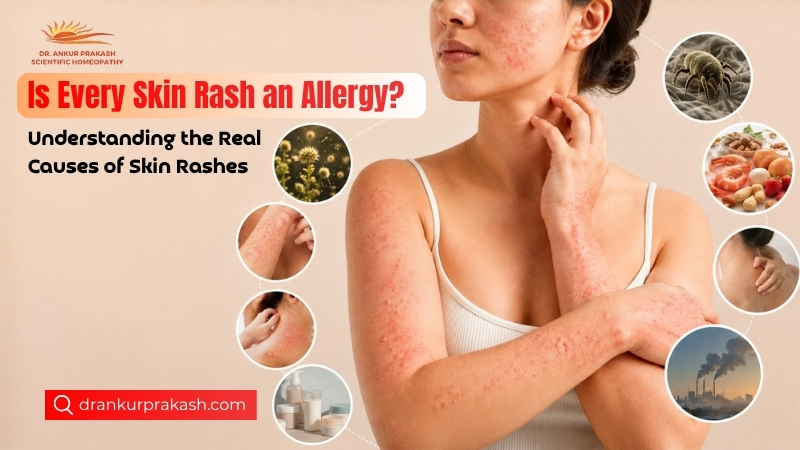
No, every skin rash is not an allergy. Although allergic reactions are a common cause of itchy or red skin, many other conditions can produce similar symptoms. Eczema, psoriasis, fungal infections, bacterial and viral illnesses, medication reactions, heat rash, autoimmune diseases, and skin irritation are all possible reasons for developing a rash.
Because different skin conditions often look alike, treating every rash as an allergy can delay the correct diagnosis. For example, a fungal infection may worsen if treated with the wrong cream, while psoriasis requires a completely different management approach than an allergic reaction.
If a rash is severe, rapidly spreading, associated with fever, facial swelling, difficulty breathing, or significant pain, seek immediate medical attention rather than attempting self-treatment.
At a Glance
Question | Quick Answer |
Is every skin rash an allergy? | No. Many skin conditions cause rashes besides allergies. |
What are the most common causes? | Eczema, allergies, fungal infections, psoriasis, medications, infections, heat rash, and skin irritation. |
Is every itchy rash an allergy? | No. Itching can occur with eczema, fungal infections, psoriasis, scabies, dry skin, and insect bites. |
Can skin rashes go away on their own? | Some mild rashes do, but persistent or worsening rashes should be medically evaluated. |
When should I seek emergency care? | Difficulty breathing, facial swelling, high fever with a rash, rapidly spreading rash, or widespread blistering require immediate medical attention. |
Why Understanding the Cause of a Rash Is Important
A skin rash is one of the most common reasons people seek medical advice. Yet many assume that any red or itchy patch is simply an allergic reaction. In reality, that assumption can lead to delayed diagnosis, ineffective treatment, and, in some cases, worsening of the underlying condition.
The appearance of a rash alone rarely tells the full story. Two people may have similar-looking red patches, but one may have eczema while the other has a fungal infection or psoriasis. Each condition develops for different reasons and requires a different treatment strategy.
Understanding what causes rashes helps you make informed decisions about when home care may be appropriate and when professional evaluation is necessary. It also reduces the risk of unnecessary medications or treatments that may not address the actual problem.
At Dr. Ankur Prakash Homeopathy Clinic, patients with recurring skin problems are evaluated individually. Along with examining the skin, factors such as symptom history, possible triggers, lifestyle, and overall health are considered before recommending a personalized management plan.
What Is a Skin Rash?
A skin rash refers to any noticeable change in the color, texture, or appearance of the skin. It is a symptom rather than a disease itself, meaning it can develop because of many different medical conditions.
Depending on the underlying cause, a rash may appear suddenly or gradually and may affect a small area or large portions of the body.
Common Signs Include:
- Red or pink patches
- Small bumps
- Raised welts (hives)
- Blisters filled with fluid
- Dry or flaky skin
- Thickened or scaly skin
- Swelling
- Itching, burning, or pain
Some rashes disappear within a few days, while others may return repeatedly or persist for weeks without proper treatment.
What Causes a Skin Rash?
There is no single cause of every rash. Instead, healthcare professionals consider a wide range of possibilities before making a diagnosis. While allergies receive the most attention, they account for only a portion of all skin rashes.
The most common causes include:
- Allergic reactions
- Contact dermatitis
- Eczema (Atopic Dermatitis)
- Psoriasis
- Fungal infections
- Viral and bacterial infections
- Heat rash
- Medication reactions
- Hives (Urticaria)
- Rosacea
- Scabies
- Autoimmune conditions such as lupus
Let’s look at each of these in more detail.
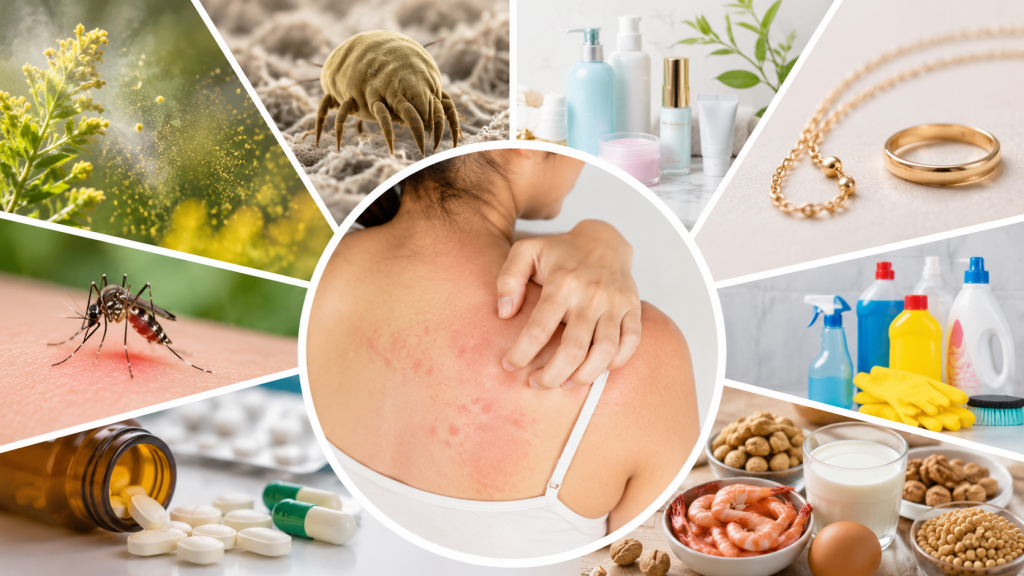
Common Causes of Skin Rashes
Allergic Skin Reactions
An allergic skin reaction occurs when the immune system responds to a substance that it mistakenly identifies as harmful. During this response, chemicals such as histamine are released, leading to itching, redness, swelling, or hives.
Common allergy triggers include:
- Certain foods
- Medications
- Latex
- Nickel-containing jewelry
- Cosmetics and skincare products
- Hair dyes
- Insect stings
- Certain plants such as poison ivy
Common symptoms
An allergic rash may cause:
- Sudden itching
- Raised red bumps or hives
- Swelling
- Warm skin
- Rash appearing shortly after exposure to a trigger
Many mild allergic reactions improve after avoiding the trigger. However, symptoms affecting breathing or causing swelling of the face or throat require emergency medical care.
What to Do If You Suspect Anaphylaxis
Although uncommon, some allergic reactions can progress to anaphylaxis, a life-threatening medical emergency.
Warning signs include:
- Difficulty breathing or wheezing
- Swelling of the lips, tongue, or throat
- Dizziness or fainting
- Rapid drop in blood pressure
- Widespread hives with breathing difficulty
First-aid steps
If you suspect anaphylaxis:
- Use an epinephrine auto-injector immediately if one has been prescribed for the person.
- Call your local emergency medical services immediately.
- Help the person lie flat with their legs slightly elevated if they feel faint. If breathing is difficult, they may be more comfortable sitting upright.
- Loosen tight clothing and monitor their breathing until help arrives.
- Do not leave the person alone.
Even if symptoms begin to improve after using epinephrine, emergency medical evaluation is still essential because symptoms can return.
Contact Dermatitis
Not every skin reaction is caused by an allergy. Sometimes the skin becomes inflamed simply because it has been exposed to an irritating substance. This condition is known as contact dermatitis.
Unlike allergic reactions, irritant contact dermatitis does not involve the immune system. Instead, repeated exposure damages the skin’s natural protective barrier.
Common irritants include:
- Household cleaning products
- Strong soaps
- Laundry detergents
- Hand sanitizers
- Industrial chemicals
- Fragrances
- Disinfectants
Symptoms
Contact dermatitis commonly causes:
- Redness
- Dry, cracked skin
- Burning sensation
- Mild swelling
- Itching or tenderness
The rash usually appears only where the skin touches the irritating substance, making the trigger easier to identify.
Eczema (Atopic Dermatitis)
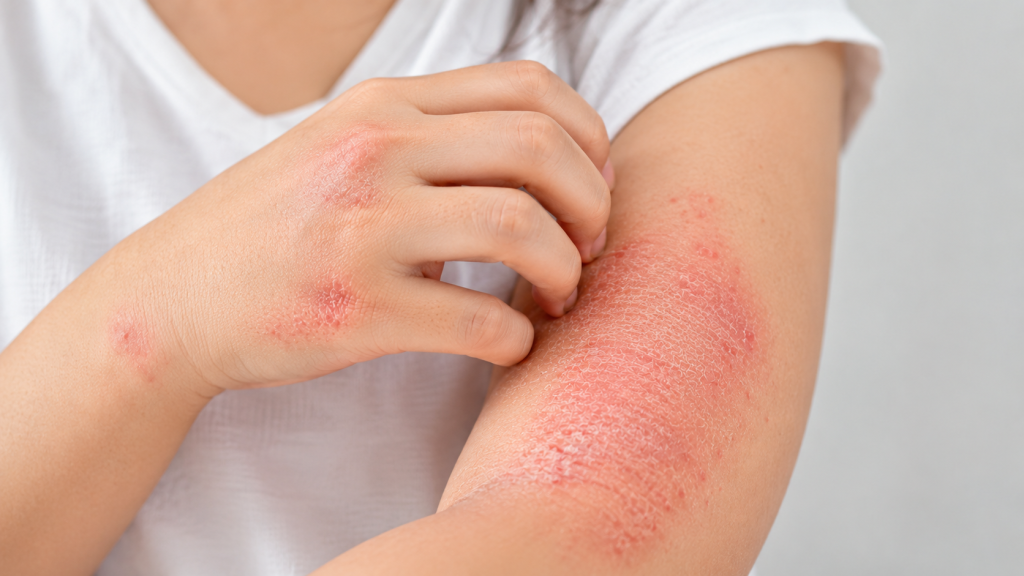
Eczema is one of the most common chronic inflammatory skin conditions. Although allergies may trigger flare-ups in some people, researchers believe eczema develops through a combination of genetic, immune system, skin barrier, and environmental factors, rather than from allergies alone.
It frequently causes recurring episodes of dry, itchy, and inflamed skin and can affect both children and adults.
Common symptoms include:
- Persistent itching
- Dry, rough skin
- Red or darker-colored patches
- Thickened skin from repeated scratching
- Small bumps that may ooze fluid during flare-ups
Common triggers
Symptoms may worsen because of:
- Dry weather
- Harsh soaps
- Dust mites
- Stress
- Excessive sweating
- Wool clothing
- Certain foods in susceptible individuals
Although eczema cannot always be permanently cured, many people successfully manage flare-ups by avoiding triggers, protecting the skin barrier, and following an individualized treatment plan.
Psoriasis
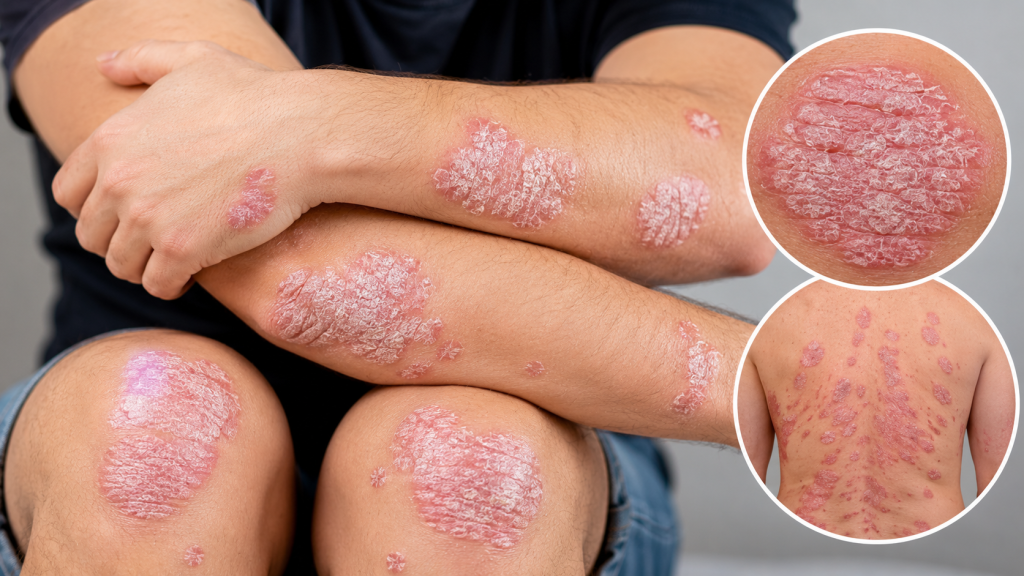
Psoriasis is a long-term inflammatory skin disease in which the immune system plays an important role, causing skin cells to grow much faster than normal. Researchers continue to study the exact mechanisms involved, and genetic and environmental factors are also believed to contribute.
Because psoriasis often causes thick, red patches, many people mistakenly assume it is an allergy.
Common symptoms include:
- Thick, raised plaques
- Silvery-white scales
- Dry or cracked skin
- Itching or burning
- Scalp involvement
- Nail changes in some people
Unlike allergic reactions, psoriasis is not contagious and usually requires long-term management to reduce flare-ups and improve quality of life.
Not every rash develops because of an allergy or chronic skin condition. Infections, medications, environmental factors, and even autoimmune diseases can produce similar-looking skin changes. Understanding these conditions can help you avoid self-diagnosis and recognize when professional medical evaluation is needed.
Fungal Skin Infections
Fungal infections are among the most commonly misdiagnosed skin conditions because they often resemble eczema or an allergic rash during the early stages. Many people apply steroid creams without knowing the actual cause, which may temporarily reduce redness but can allow the fungal infection to spread further.
Fungi thrive in warm, moist environments and can spread through direct skin contact, contaminated surfaces, or shared personal items.
Common fungal infections include:
- Ringworm (Tinea corporis): Circular, red patches with a raised, scaly border and a clearer center.
- Athlete’s Foot (Tinea pedis): Itching, peeling, and cracking between the toes or on the soles of the feet.
- Jock Itch (Tinea cruris): An itchy rash affecting the groin and inner thighs.
Symptoms may include:
- Ring-shaped or circular rash
- Redness and scaling
- Persistent itching
- Cracked or peeling skin
- Gradually enlarging patches
If a rash continues to spread despite using steroid creams, a fungal infection should be considered and evaluated by a healthcare professional.
Viral and Bacterial Infections
Several infections cause rashes as part of the body’s immune response. Unlike an allergic reaction, these rashes are often accompanied by symptoms such as fever, sore throat, fatigue, or swollen lymph nodes.
Viral infections that may cause skin rashes include:
- Chickenpox
- Measles
- Rubella
- Hand, Foot and Mouth Disease
- Shingles
Bacterial infections include:
- Scarlet fever
- Cellulitis
- Impetigo
The appearance of these rashes varies depending on the infection. Some cause small red spots, while others produce blisters or widespread redness.
If a rash develops together with fever, increasing pain, pus, or rapidly worsening symptoms, medical evaluation should not be delayed.
Heat Rash (Prickly Heat)
Heat rash occurs when sweat becomes trapped beneath the skin because sweat ducts are blocked. It is especially common during hot, humid weather and among infants, athletes, and people who sweat excessively.
Common symptoms include:
- Tiny red bumps
- Mild itching
- Prickling or stinging sensation
- Small blisters
- Rash in skin folds
Heat rash commonly affects the:
- Neck
- Chest
- Upper back
- Underarms
- Groin
Most cases improve by cooling the skin, staying hydrated, wearing loose cotton clothing, and avoiding excessive heat.
Medication-Related Skin Rashes
Some medicines can trigger skin reactions ranging from mild redness to serious allergic responses. These reactions may appear within hours or even several weeks after starting a new medication.
Medicines commonly associated with rashes include:
- Certain antibiotics
- Anti-seizure medicines
- Non-steroidal anti-inflammatory drugs (NSAIDs)
- Some blood pressure medications
- Chemotherapy medicines
Never stop taking a prescribed medication without medical advice unless you are experiencing symptoms of a severe allergic reaction.
A widespread rash after starting a new medicine should always be assessed promptly.
Hives (Urticaria)
Hives, also called urticaria, are one of the most common skin conditions confused with allergies. They appear as raised, itchy welts that can vary in size and often change location within hours.
Although allergies can trigger hives, they are not the only cause.
Common triggers include:
- Food allergies
- Viral infections
- Certain medications
- Physical pressure on the skin
- Heat or cold exposure
- Emotional stress
Most individual hives disappear within 24 hours, although new ones may continue to appear.
If hives are accompanied by swelling of the lips, tongue, or throat, or by difficulty breathing, seek emergency medical care immediately.
Rosacea
Rosacea is a chronic inflammatory skin condition that mainly affects the face. Many people mistake it for an allergic reaction because of persistent redness and sensitivity.
Unlike an allergy, rosacea tends to develop gradually and often follows a pattern of flare-ups and remission.
Common symptoms include:
- Persistent facial redness
- Flushing
- Visible blood vessels
- Acne-like bumps
- Burning or stinging sensation
Common triggers include hot drinks, spicy foods, sunlight, alcohol, and emotional stress.
Early diagnosis can help reduce flare-ups and improve long-term skin health.
Scabies
Scabies is a contagious skin condition caused by tiny mites that burrow into the skin. Because it causes intense itching and a widespread rash, it is often mistaken for eczema or an allergic reaction.
Symptoms include:
- Severe itching, especially at night
- Small bumps or blisters
- Thin burrow lines in the skin
- Rash between the fingers, wrists, waistline, or groin
Scabies spreads through prolonged skin-to-skin contact and requires treatment for both the affected person and close contacts.
Prompt diagnosis helps prevent further spread.
Lupus (Butterfly Rash)
Systemic lupus erythematosus (SLE) is an autoimmune disease that can affect multiple organs, including the skin.
One of its most recognized signs is the malar (butterfly) rash, which appears across the cheeks and bridge of the nose.
Other symptoms may include:
- Increased sensitivity to sunlight
- Joint pain
- Fatigue
- Mouth ulcers
- Hair loss
Unlike simple allergic reactions, lupus requires ongoing medical care and should be evaluated by a healthcare professional.
Allergy vs Other Skin Conditions: What's the Difference?
Many skin conditions share similar symptoms, making self-diagnosis difficult. The table below highlights some important differences.
Condition | Main Cause | Itching | Contagious | Typical Appearance |
Allergic Rash | Immune reaction to an allergen | Usually severe | No | Hives, red patches, swelling |
Contact Dermatitis | Skin irritation or allergy | Common | No | Red, inflamed skin where contact occurred |
Eczema | Chronic inflammatory condition | Very common | No | Dry, itchy, cracked patches |
Psoriasis | Immune-mediated inflammatory disease | Mild to moderate | No | Thick plaques with silvery scales |
Fungal Infection | Fungus | Common | Often yes | Circular, scaly patches |
Rosacea | Chronic inflammatory condition | Mild | No | Facial redness with visible blood vessels |
Scabies | Mite infestation | Severe, especially at night | Yes | Small bumps and burrow lines |
Lupus | Autoimmune disease | Variable | No | Butterfly rash over the cheeks |
Key Point: A rash may look similar regardless of the cause, but the appropriate treatment depends entirely on the underlying condition.
Can the Symptoms Help Identify the Cause?
Although symptoms alone cannot confirm a diagnosis, they often provide valuable clues about the underlying condition.
If Your Rash Is Extremely Itchy
Common possibilities include:
- Eczema
- Allergic reactions
- Contact dermatitis
- Scabies
- Fungal infections
- Insect bites
If Your Rash Is Circular
Consider:
- Ringworm (fungal infection)
- Certain inflammatory skin conditions
A ring-shaped rash should be medically evaluated before using steroid creams.
If Your Rash Has Thick Scales
This pattern is more commonly associated with:
- Psoriasis
- Chronic eczema
- Some fungal infections
If Your Rash Forms Blisters
Possible causes include:
- Chickenpox
- Shingles
- Contact dermatitis
- Severe allergic reactions
- Certain autoimmune skin disorders
Large or painful blisters should never be ignored.
If the Rash Keeps Returning
Recurring skin problems may indicate:
- Chronic eczema
- Psoriasis
- Rosacea
- Repeated exposure to allergens
- Autoimmune conditions
Keeping a diary of flare-ups, new medications, skincare products, foods, and environmental exposures can help identify possible triggers.
When Should You Schedule a Medical Appointment?
Many mild rashes improve with proper skin care and avoidance of known triggers. However, you should arrange a medical evaluation if your rash:
- Lasts longer than one to two weeks
- Continues to worsen despite home care
- Frequently returns
- Covers a large area of the body
- Becomes painful
- Produces pus or signs of infection
- Appears after starting a new medication
- Interferes with sleep or daily activities
Early diagnosis often leads to more effective treatment and helps prevent complications.
Seek Emergency Medical Care Immediately If You Have:
Do not wait for a routine appointment if you experience any of the following:
- Difficulty breathing or wheezing
- Swelling of the lips, tongue, face, or throat
- A rash accompanied by a high fever
- Purple or black discoloration of the skin
- Rapidly spreading rash
- Large blisters or peeling skin
- Confusion, fainting, or severe dizziness
These symptoms may indicate a severe allergic reaction, serious infection, or another medical emergency requiring immediate treatment.
How Are Skin Rashes Diagnosed?
Because many skin conditions can appear similar, diagnosing a rash requires more than simply looking at its color or appearance. A red, itchy patch may be caused by an allergy, eczema, fungal infection, psoriasis, medication reaction, or another underlying condition.
A proper evaluation helps identify the actual reason behind the rash and prevents inappropriate treatment.
During a consultation, a healthcare professional may consider:
- Appearance of the rash: Location, shape, color, texture, and pattern.
- Duration: Whether it appeared suddenly, developed gradually, or keeps returning.
- Associated symptoms: Itching, pain, burning, fever, swelling, or fatigue.
- Medical history: Previous allergies, skin conditions, autoimmune disorders, or infections.
- Possible triggers: New foods, medicines, skincare products, detergents, stress, weather changes, or environmental exposure.
Depending on the suspected condition, additional tests may include:
Patch Testing
Patch testing helps identify substances that may trigger allergic contact dermatitis, such as certain metals, fragrances, preservatives, or chemicals.
Skin Scraping or Microscopy
A small sample from the affected area may be examined to identify fungal infections or conditions such as scabies.
Blood Tests
Blood tests may be recommended when a healthcare provider suspects infection, inflammation, or autoimmune conditions such as lupus.
Skin Biopsy
In some cases, a small sample of skin is examined under a microscope to confirm or rule out specific skin disorders.
An accurate diagnosis is especially important because treatments that help one condition may worsen another. For example, using steroid creams on an undiagnosed fungal infection may allow the infection to spread.
Treatment Options for Skin Rashes
There is no universal treatment for every rash because the right approach depends on the underlying condition. Managing a rash effectively begins with identifying the cause rather than only reducing visible symptoms such as redness or itching.
Treatment options may include:
Medicines for Allergic Skin Reactions
For allergic rashes and hives, healthcare providers may recommend:
- Oral antihistamines: To help reduce itching, hives, and other allergy-related symptoms.
- Topical treatments: To calm localized irritation when appropriate.
- Trigger avoidance: Identifying and avoiding the substance responsible for the reaction.
If a person experiences severe allergic symptoms involving breathing difficulty or swelling, emergency treatment is required.
Treatments for Inflammatory Skin Conditions
Conditions such as eczema, contact dermatitis, and some forms of psoriasis may require treatments that reduce inflammation.
Depending on the condition, treatment may include:
- Topical corticosteroids: Such as hydrocortisone-class medicines, used under medical guidance to reduce inflammation and itching.
- Moisturizers and barrier-repair creams: To improve dry skin and protect the skin barrier.
- Other prescription anti-inflammatory treatments: For selected chronic skin conditions.
Long-term management often focuses on reducing triggers and preventing flare-ups rather than only treating symptoms during an outbreak.
Treatment for Fungal Skin Infections
Fungal rashes require antifungal medicines rather than allergy treatments.
Healthcare providers may recommend:
- Topical antifungal medications for localized infections.
- Oral antifungal medicines for extensive or difficult-to-treat infections.
The correct diagnosis is important because fungal infections can worsen when treated incorrectly.
Treatment for Bacterial and Viral Skin Infections
Depending on the infection, treatment may include:
- Antibiotics for confirmed bacterial infections.
- Antiviral medicines for selected viral infections.
- Supportive care to reduce discomfort and prevent complications.
Self-treating infectious rashes without proper diagnosis may delay recovery.
Living With Chronic Skin Conditions
Some skin conditions, including eczema, psoriasis, and rosacea, may follow a long-term pattern of improvement and flare-ups. While these conditions cannot always be permanently eliminated, many people are able to manage symptoms effectively with consistent care.
Living well with a chronic skin condition often involves:
Identifying Personal Triggers
Triggers vary from person to person. Common factors that may worsen symptoms include:
- Stress
- Weather changes
- Certain skincare products
- Excessive sweating
- Friction
- Allergens
- Lack of sleep
Keeping track of flare-ups can help identify patterns.
Following a Consistent Skincare Routine
Healthy skin habits may include:
- Using gentle cleansers
- Moisturizing regularly
- Avoiding harsh chemicals
- Protecting the skin from excessive sun exposure
- Following prescribed treatment plans
Understanding That Flare-Ups Can Happen
Many chronic skin conditions naturally improve and worsen over time. A flare-up does not always mean treatment has failed. Instead, it may indicate the need to review triggers, lifestyle factors, or the current management approach with a healthcare professional.
Homeopathic Supportive Care for Chronic Skin Conditions
At Dr. Ankur Prakash Homeopathy Clinic, homeopathic treatment is offered as an individualized complementary approach for selected patients managing chronic skin concerns such as eczema, recurrent dermatitis, and psoriasis.
Rather than focusing only on the visible appearance of a rash, a detailed consultation considers multiple individual factors, including:
- Type and pattern of skin symptoms
- Duration and frequency of flare-ups
- Associated itching, dryness, or discomfort
- Personal health history
- Lifestyle factors
- Possible environmental triggers
The aim is to understand the individual’s overall health profile and provide personalized supportive care.
However, it is important to understand that homeopathy should not replace emergency medical treatment or evidence-based care for conditions such as:
- Severe allergic reactions
- Serious infections
- Rapidly spreading rashes
- Severe blistering conditions
- Other urgent medical problems
Patients with persistent, unexplained, or worsening rashes should receive appropriate medical evaluation.
Book a consultation with Dr. Ankur Prakash Homeopathy Clinic to discuss your chronic skin concerns and explore an individualized supportive care approach.
How Can You Prevent Common Skin Rashes?
Although not every rash can be prevented, certain habits can reduce the likelihood of irritation and flare-ups.
Protect Your Skin Barrier
- Use gentle, fragrance-free skincare products.
- Moisturize regularly, especially if you have dry skin.
- Avoid excessive washing with harsh soaps.
- Apply sunscreen when exposed to strong sunlight.
Avoid Known Triggers
If you know certain substances worsen your skin, try to avoid:
- Specific cosmetics
- Strong detergents
- Certain metals
- Fragranced products
- Personal triggers identified during previous flare-ups
Maintain Healthy Skin Habits
- Wear breathable clothing during hot weather.
- Keep skin folds dry.
- Avoid sharing towels and personal items.
- Shower after heavy sweating.
- Avoid scratching irritated skin, as this can worsen inflammation and increase infection risk.
Frequently Asked Questions
Is every itchy skin rash an allergy?
No. Allergies are only one possible explanation. Other itchy skin rash causes include eczema, fungal infections, scabies, psoriasis, dry skin, and insect bites.
How do I know if my rash is caused by an allergy?
An allergic rash often appears after exposure to a trigger and may cause itching, hives, redness, or swelling. However, many other conditions can look similar, so a medical evaluation may be needed for an accurate diagnosis.
Can stress cause a skin rash?
Stress does not directly cause every rash, but it may trigger or worsen some conditions, including eczema, psoriasis, hives, and rosacea.
How long does a skin rash usually last?
The duration depends on the cause. Some mild irritation-related rashes improve within days, while chronic conditions such as eczema or psoriasis may require long-term management.
Can I use steroid cream for any rash?
No. Steroid creams may help certain inflammatory conditions but can worsen some infections, particularly fungal rashes. It is best to identify the cause before using medicated creams.
When should I see a doctor for a rash?
You should seek medical advice if the rash:
- Does not improve after several days of appropriate care
- Keeps returning
- Spreads
- Becomes painful
- Is associated with fever or other symptoms
- Appears after starting a new medicine
Conclusion
A skin rash is a symptom, not a diagnosis. Although allergies are a common reason for red or itchy skin, they are only one of many possible explanations. Conditions such as eczema, psoriasis, fungal infections, scabies, rosacea, medication reactions, and autoimmune disorders can all produce similar-looking rashes.
Understanding the possible causes of skin irritation helps you make better decisions about when self-care may be appropriate and when professional guidance is needed. Avoid assuming that every rash is an allergy, because the correct treatment depends on identifying the underlying condition.
At Dr. Ankur Prakash Homeopathy Clinic, patients with selected chronic skin concerns receive individualized homeopathic supportive care based on their symptoms, history, and overall health profile. This approach is intended to complement appropriate medical evaluation and conventional care whenever required.
If you have a persistent, recurring, or unexplained rash, consult a qualified healthcare professional for proper assessment and guidance.
References
- Cleveland Clinic – Rashes and Red Skin
- UCHealth – Skin Rashes: Causes, Symptoms and Treatment
- Medical News Today – Skin Rash: Causes, Symptoms and Treatment
- American Academy of Dermatology – Skin Conditions Resources
- National Institute of Arthritis and Musculoskeletal and Skin Diseases – Skin Diseases Information