Blood cancer affects the production and function of blood cells, often starting in the bone marrow or lymphatic system. Unlike solid tumors, these cancers circulate through the bloodstream and can impact the entire body. Understanding the different types of blood cancer—such as leukemia, lymphoma, and myeloma—is essential for early diagnosis, informed treatment decisions, and supportive care. At Dr Ankur Prakash, Agra, patient-centered guidance focuses on awareness, early detection, and integrative support throughout the cancer journey.
This blog explains the key blood cancer types, their symptoms, causes, and risk factors, along with how a holistic approach can support overall well-being during treatment. It also explores how homeopathy can help in cancer care by focusing on strengthening immunity, improving quality of life, and managing treatment-related side effects.
What Is Blood Cancer and How Does It Develop?
Blood cancer occurs when abnormal blood cells grow uncontrollably and disrupt the production of healthy blood cells. It usually begins in the bone marrow or lymphatic system, affecting the body’s ability to fight infections, carry oxygen, and control bleeding. These abnormal cells can spread through the bloodstream to organs like the liver, spleen, and lymph nodes. The disease may progress slowly or rapidly depending on the type. Understanding how it develops helps doctors plan appropriate treatment, support early diagnosis, and improve overall quality of life.
Types of Blood Cancer
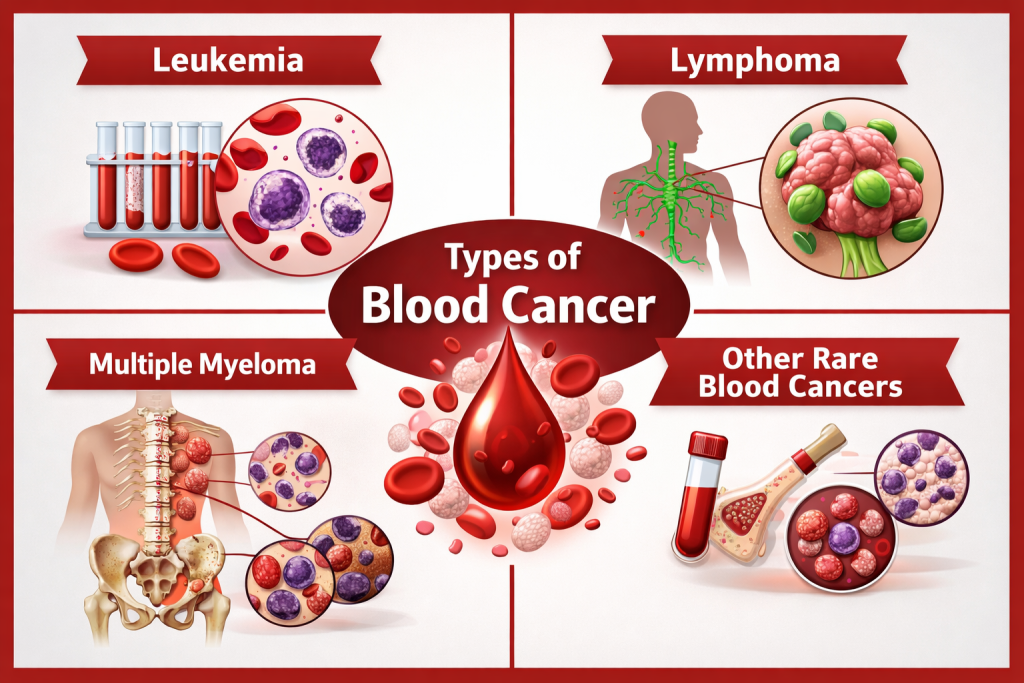
There are three primary blood cancer types, each affecting different blood cells and body systems. However, within these main categories, several subtypes exist based on the specific cells involved and how the disease progresses.
Leukemia — Cancer of Blood-Forming Tissues
Leukemia begins in the bone marrow, where blood cells are produced, and causes the body to generate large numbers of abnormal white blood cells that cannot function properly. Among major blood cancer types, leukemia is further divided into four main forms:
Acute Leukemias (fast-growing):
- Acute Lymphoblastic Leukemia (ALL)
- Acute Myeloid Leukemia (AML)
Chronic Leukemias (slow-progressing):
- Chronic Lymphocytic Leukemia (CLL)
- Chronic Myeloid Leukemia (CML)
Symptoms often include fatigue, frequent infections, fever, bone pain, and easy bruising or bleeding.
Lymphoma — Cancer of the Lymphatic System
Lymphoma affects lymphocytes, a type of white blood cell found in the lymphatic system, which is crucial for immune defense. This group of blood cancer types develops when abnormal lymphocytes multiply and accumulate in lymph nodes and organs. The two major categories are:
Hodgkin Lymphoma (HL)
Characterized by the presence of Reed-Sternberg cells and often starts in lymph nodes of the upper body.
Non-Hodgkin Lymphoma (NHL)
A larger and more diverse group that includes many subtypes, such as:
- Diffuse Large B-Cell Lymphoma
- Follicular Lymphoma
- Mantle Cell Lymphoma
- Burkitt Lymphoma
- T-Cell Lymphomas
Common symptoms include painless swollen lymph nodes, fever, night sweats, weight loss, and fatigue.
Multiple Myeloma — Cancer of Plasma Cells
Multiple myeloma affects plasma cells, which normally produce antibodies to fight infections. In this form of blood cancer types, abnormal plasma cells accumulate in the bone marrow and interfere with the production of healthy blood cells. Related plasma cell disorders include:
- Smoldering Multiple Myeloma
- Solitary Plasmacytoma
- Light Chain Myeloma
Patients may experience bone pain, anemia, kidney problems, frequent infections, and high calcium levels.
Other Rare Blood Cancers
In addition to the three major blood cancer types, there are less common forms, including:
- Myelodysplastic Syndromes (MDS) — Disorders where blood cells do not mature properly
- Myeloproliferative Neoplasms (MPN) — Conditions causing overproduction of blood cells
- Waldenström Macroglobulinemia — A rare type of lymphoma affecting antibody production
Causes and Risk Factors
The exact blood cancer reason is not always known, as the disease often develops due to a combination of genetic and environmental factors. However, researchers have identified several conditions and exposures that may increase the risk of developing the disease. Key risk factors include:
- Genetic predisposition — A family history of blood disorders or certain genetic mutations may increase susceptibility
- Exposure to radiation or harmful chemicals — Contact with high levels of radiation, benzene, pesticides, or industrial chemicals can damage bone marrow cells
- Weak immune system — Individuals with immune deficiencies or autoimmune diseases may have a higher risk
- Previous cancer therapies — Past chemotherapy or radiation treatment for other cancers can sometimes lead to secondary blood cancers
- Smoking and unhealthy lifestyle factors — Long-term tobacco use and poor lifestyle habits may contribute to cellular damage
- Certain viral infections — Some viruses are linked to increased risk of specific blood cancers
Understanding the causes of blood cancer and associated risk factors can encourage preventive health monitoring, lifestyle modifications, and early screening. Regular medical checkups and attention to unusual symptoms play an important role in early detection and better treatment outcomes.
Blood Cancer Symptoms
Blood cancer symptoms can affect different parts of the body because the disease interferes with normal blood cell production and immune function. Below is a simple explanation of the common warning signs:
Persistent fatigue and weakness
Occurs due to low red blood cells (anemia), which reduces oxygen supply to the body, making you feel constantly tired.
Frequent infections
Abnormal white blood cells cannot fight germs effectively, leading to repeated infections, colds, or fevers.
Fever or night sweats
The body may respond to abnormal cells with ongoing fever or excessive sweating during sleep.
Unexplained weight loss
Sudden weight loss without dieting can happen because the body uses more energy to fight the disease.
Easy bruising or bleeding
Low platelet levels make it harder for blood to clot, causing frequent nosebleeds, gum bleeding, or bruises.
Pale skin or anemia
Reduced red blood cells can make the skin appear pale and cause weakness or dizziness.
Bone or joint pain — Cancer cells in the bone marrow can cause pain or tenderness, especially in the back, hips, or legs.
Swollen lymph nodes — Painless swelling in the neck, armpits, or groin may indicate lymphatic system involvement.
Shortness of breath — Low oxygen-carrying capacity of blood can make breathing feel difficult, even with mild activity.
Loss of appetite — The disease and its effects on metabolism may reduce hunger and interest in food.
If multiple symptoms appear together or persist for a long time, medical evaluation is important for early detection and proper care.
Is Blood Cancer Curable?
Whether blood cancer is curable depends on the specific type, stage at diagnosis, response to treatment, and the patient’s overall health. Some blood cancers can be completely cured, particularly when detected early and treated promptly, while others may be controlled for long periods with ongoing medical care. Key points include:
- Some blood cancers are curable — Early-stage acute leukemias and certain lymphomas often have high cure rates with appropriate treatment.
- Early detection improves outcomes — Diagnosis before the disease spreads allows more effective therapy and better recovery chances.
- Acute leukemias and aggressive lymphomas may respond well — Intensive treatment can lead to complete remission in many patients.
- Chronic blood cancers can often be managed long-term — Some slow-growing types allow patients to live many years with proper monitoring and therapy.
- Advanced therapies have improved survival rates — Targeted therapy, immunotherapy, and stem cell transplantation have transformed treatment success.
- Remission is possible in many cases — Patients may experience long periods with no active disease.
- Personalized treatment plans influence outcomes — Age, general health, and treatment response play a major role in prognosis.
Even when a complete cure is not possible, modern treatment and supportive care can control the disease, reduce symptoms, and help patients maintain a good quality of life for many years. Regular follow-ups and a comprehensive care approach are essential for long-term management and well-being.
How Homeopathy Can Help in Cancer Care
Homeopathy is often used as a complementary therapy alongside conventional treatment to support overall well-being during cancer care. For patients facing different blood cancer types, personalized homeopathic care focuses on strengthening the body’s natural healing capacity, improving resilience, and helping the patient cope better with the physical and emotional challenges of treatment. Benefits of blood cancer treatment in homeopathy may include:
- Supporting immunity and energy levels — Helping the body maintain strength and resistance during intensive therapies
- Reducing treatment side effects such as nausea and fatigue — Providing relief from discomfort caused by chemotherapy or radiation
- Improving appetite and sleep — Assisting patients in maintaining nutrition and proper rest for recovery
- Enhancing emotional well-being — Helping manage anxiety, stress, and mood changes associated with long-term illness
- Supporting overall quality of life — Encouraging better physical comfort and daily functioning
Homeopathic remedies are selected individually based on symptoms, constitution, disease stage, and medical history. At Dr Ankur Prakash, Agra, the approach emphasizes holistic support alongside standard medical care under professional supervision.
FAQs
What is the success rate of homeopathy?
The success of homeopathy varies depending on the individual, the condition being treated, its severity, and how early treatment begins. Many people report improvement in symptoms and overall well-being, especially in chronic conditions, when remedies are prescribed by a qualified practitioner.
Can a person recover from blood cancer?
Yes, many people can recover from blood cancer, especially with early diagnosis and proper treatment. Some types have high cure rates, while others can be managed long-term. Recovery depends on the cancer type, stage, treatment response, age, and overall health.
Can blood cancer be cured in stage 4?
Stage 4 blood cancer is advanced, but cure may still be possible in certain cases depending on the specific type (such as some leukemias or lymphomas). Even when a complete cure is difficult, modern treatments can control the disease, reduce symptoms, and extend life expectancy with good quality of life.
Can blood cancer be treated successfully?
Yes, many blood cancers can be treated successfully today. Advances in chemotherapy, targeted therapy, immunotherapy, and stem cell transplant have greatly improved survival rates. Early detection and personalized treatment plans play a major role in achieving the best outcomes.
Final Thoughts
Blood cancer can be overwhelming, but knowledge and early action make a powerful difference. Understanding various blood cancer types allows patients and families to recognize warning signs, explore treatment options, and adopt supportive care strategies that enhance quality of life. When integrated responsibly with conventional medicine, homeopathy can provide comfort, resilience, and hope throughout the cancer journey.
Disclaimer
This content is for informational purposes only and not a substitute for professional medical advice, diagnosis, or treatment. Always consult a qualified healthcare professional for any medical concerns.