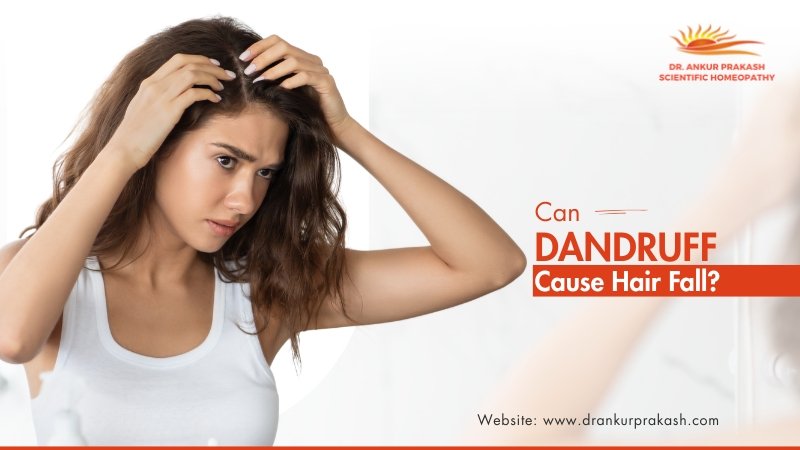
Many people wonder if dandruff can actually cause hair fall. While dandruff itself doesn’t usually lead to permanent hair loss, the intense itching and irritation it creates can make you scratch your scalp repeatedly. This scratching can injure hair follicles, weaken hair roots, and result in increased shedding or breakage. Over time, untreated or severe dandruff may also cause scalp inflammation, making it harder for healthy hair to grow. Factors like dry scalp, excess oil, or fungal infections can worsen the problem.
By treating dandruff promptly with medicated shampoos, gentle scalp care, a balanced diet, and considering homeopathy treatment for dandruff, you can reduce hair fall and help your scalp stay healthy, creating a better environment for stronger hair growth.
What is Dandruff?
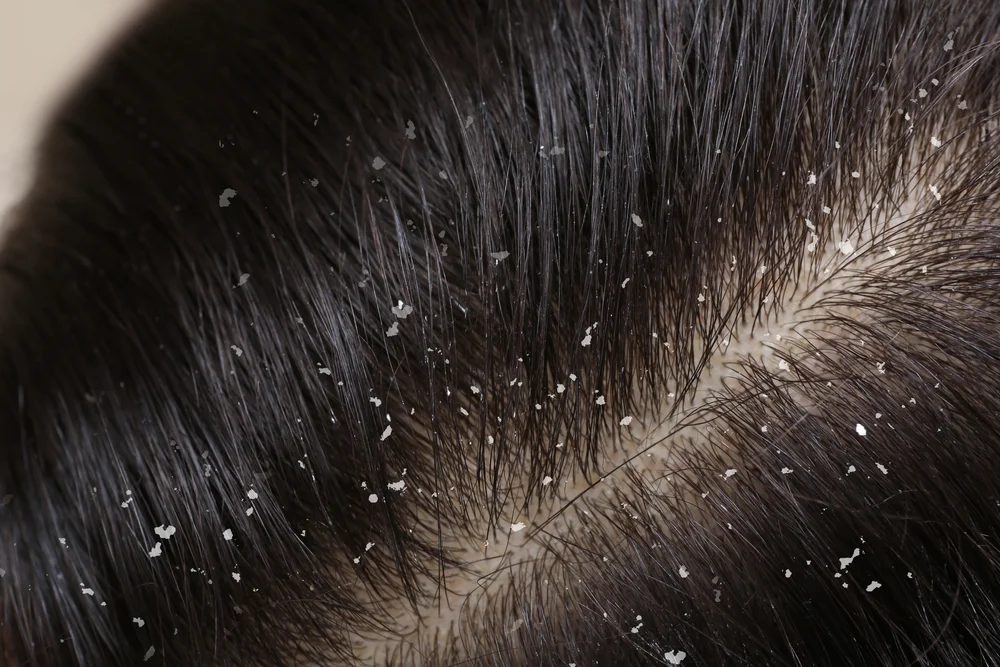
Dandruff is a common, non-contagious scalp condition where dead skin cells shed in larger, visible flakes. Though it isn’t medically serious, it can be uncomfortable, persistent, and even embarrassing. Many people experience dandruff at some point in life — from teenagers to adults — especially during seasonal changes or times of stress.
The scalp’s skin renews itself every month, but in dandruff, this process speeds up. As a result, dead skin cells clump together with scalp oil, forming visible flakes. People often ask, does dandruff cause hair fall? The answer depends on how dandruff affects the scalp, which we’ll explore below.
Dandruff Cause Hair Fall
Dandruff accelerates hair fall by inflaming the scalp, clogging follicles, and disrupting the hair growth cycle. Chronic flakes and itching damage roots, leading to breakage, thinning, and potential long-term loss if untreated.
Inflammation and Aggressive Scratching:
Itchy dandruff prompts constant scratching. This physically damages hair shafts, weakens follicles, and causes breakage. Micro-tears in the scalp trigger telogen effluvium—excessive shedding where hair enters resting phase early. Over weeks, visible thinning appears.
Clogged Hair Follicles:
Excess sebum, dead skin flakes, and product buildup block pores. Oxygen and nutrients can’t reach roots. Weakened strands grow thin and snap easily during brushing or styling, increasing fallout by 20-30% in active cases.
Fungal Overgrowth (Malassezia):
Natural scalp yeast feeds on oils, producing oleic acid irritants. This shortens the anagen (growth) phase from 2-6 years to months. Hair follicles miniaturize, mimicking early androgenetic alopecia patterns.
Oil and Moisture Imbalance:
Oily dandruff suffocates follicles under greasy buildup, starving them of air. Dry dandruff strips natural oils, leaving scalp brittle. Both extremes make strands porous, prone to snapping from tension or environmental stress.
Nutrient Disruption and Cycle Damage:
Irritated scalps absorb fewer vitamins like biotin, zinc, iron. Hormonal signals falter, extending telogen phase. Chronic cases (>6 months) risk scarring alopecia, permanent follicle shutdown.
Compounding Factors:
Stress, poor diet, harsh shampoos amplify damage. Combined, they create a vicious cycle: more dandruff fuels more fall, up to 100-150 hairs daily vs. normal 50-100.
Break the cycle early. Anti-fungal treatments like ketoconazole shampoos reduce yeast 70% in 4 weeks. Add scalp massages, balanced nutrition, and mild cleansing for 80% less fallout. Consult dermatologists for persistent cases.
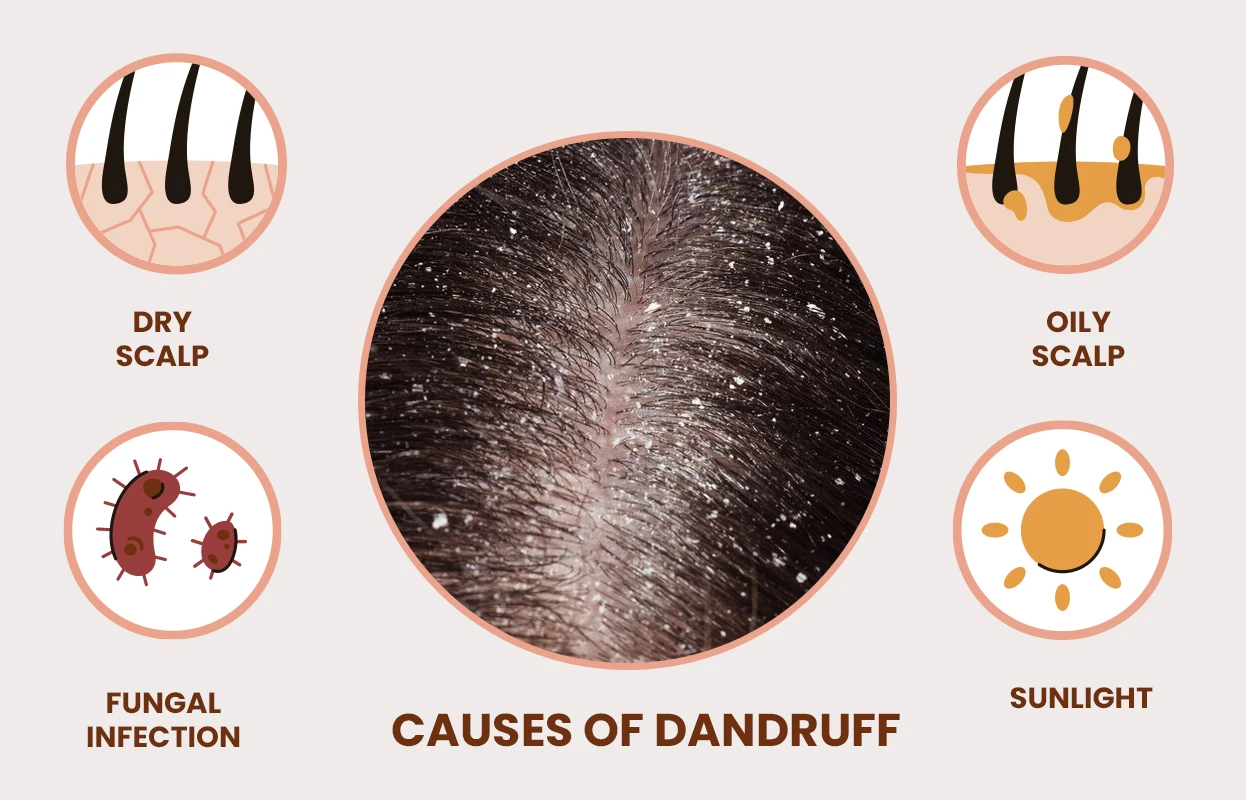
What Are the Symptoms of Dandruff?
The most common sign of dandruff is visible white or yellow flakes on the scalp and shoulders. Other symptoms can include:
Visible Flakes: The most noticeable sign — small, white, or yellowish flakes on the scalp, hair, and shoulders. These flakes may be dry and powdery (common in dry dandruff) or greasy and clumped together (seen in oily dandruff or seborrheic dermatitis).
Itchy Scalp: Persistent itching often appears before flakes are obvious. Scratching may temporarily relieve the itch but can irritate the scalp and worsen flaking.
Scalp Dryness or Greasiness: Depending on the type, the scalp may feel tight, dry, and rough, or oily and heavy, sometimes with a mild scalp odor.
Redness and Irritation: Mild redness or tenderness, especially after scratching, can indicate inflammation or sensitivity.
Mild Hair Fall: Frequent scratching and scalp inflammation can weaken hair roots, leading to hair strands shedding during washing or combing — making people ask, does dandruff cause hair fall? (and indirectly, yes, it can).
These signs may come and go but often get worse in winter, with stress, or after using harsh hair products.
Types of Dandruff in Hair
Dandruff doesn’t look or behave the same for everyone. It can vary based on scalp type, skin health, underlying conditions, and even seasonal or lifestyle factors. Recognizing your type of dandruff is the first step in choosing the most effective treatment. Here are the main types:
Dry Skin Dandruff:
Appears as small, fine, dry white flakes that easily fall from the scalp and shoulders.
Often worse during winter, in dry climates, or after frequent hot showers that strip natural scalp oils.
The scalp may feel tight, itchy, or rough, and flakes don’t feel greasy.
Oily Scalp Dandruff (Seborrheic Dandruff):
Characterized by larger, sticky, yellowish or white flakes that cling to hair and scalp.
Caused by excessive sebum production mixing with dead skin cells.
The scalp often feels greasy, heavy, and may have a mild odor.
Fungal Dandruff (Malassezia-related):
Triggered by overgrowth of the yeast-like fungus Malassezia globosa naturally present on the scalp.
The fungus breaks down scalp oils into irritating fatty acids, leading to redness, itching, and moderate to severe flaking.
Symptoms may worsen with sweating, humid weather, or stress.
Each type of dandruff tells a different story about what’s happening on the scalp — whether it’s excess oil, dryness, fungal imbalance, skin sensitivity, or chronic inflammation. Knowing your type not only helps in choosing the right shampoo or remedy but can also guide whether you need lifestyle changes, medical advice, or even homeopathy treatment for dandruff to address deeper causes and prevent recurrence.
How to Get Rid of Dandruff?
Many people ask how to remove dandruff quickly and safely. Here are practical, dermatologist-approved steps:
Use anti-dandruff shampoo: Look for active ingredients like ketoconazole, zinc pyrithione, selenium sulfide, or salicylic acid to reduce fungus and flakes.
Massage gently: Use your fingertips (not nails) to help loosen flakes without scratching or irritating the scalp.
Rinse thoroughly: Shampoo or conditioner left on the scalp can worsen flaking and itching.
Wash regularly but not excessively: Washing too often strips natural oils, while too little allows oil and dead skin to build up. Find a routine that suits your hair type.
Avoid hot water: Lukewarm water cleans effectively without drying out the scalp.
Don’t scratch: Scratching damages scalp skin and can lead to more flakes and even hair breakage.
If dandruff keeps coming back or feels severe, consult a specialist for personalized care, which may include homeopathy treatment for dandruff to address deeper causes gently.
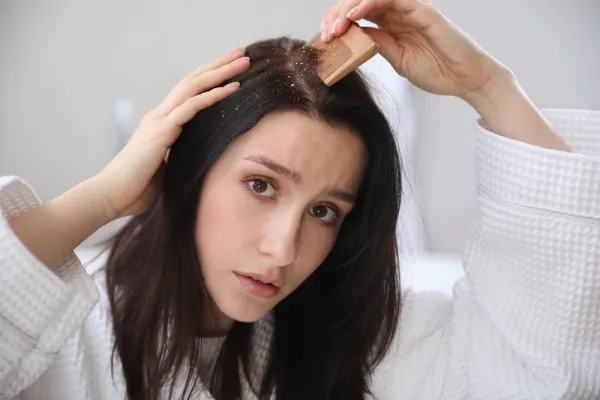
Can Dandruff Cause Hair Fall?
Yes, dandruff indirectly causes hair fall and loss. Dandruff alone doesn’t destroy follicles permanently. It creates scalp conditions—itchiness, inflammation, fungal overgrowth, blockages—that weaken roots, trigger shedding, and accelerate breakage. Normal daily hair loss: 50-100 strands. Dandruff doubles or triples this to 100-300 strands through chronic irritation.
Scratching and Scalp Inflammation:
Itching from dandruff flakes prompts vigorous scratching. This physically breaks hair shafts mid-length, damages follicle openings, and causes micro-abrasions. Inflamed scalps release cytokines—inflammatory signals—that push 20-30% more hairs into telogen (resting/shedding) phase prematurely. Result: diffuse thinning visible in 4-6 weeks.
Blocked Follicles and Sebum Buildup:
Excess oil (sebum) mixes with dead cells, forming plugs in follicles. Oxygen, blood flow, and nutrients drop 40-50%. Strands grow fragile, snap under combing tension (20-30% more fallout), and struggle through growth cycles. Oily dandruff worsens this; dry types add brittleness.
Secondary Infections and Stress Response:
Open scratches invite bacterial entry (Staph/Strep), causing folliculitis—inflamed follicle pustules. Body stress hormones (cortisol) elevate, extending telogen phase by 2-3 months. Zinc/biotin absorption falls 25%, starving follicles further. Chronic cases (>6 months) risk perifollicular fibrosis—scar tissue around roots.
Compounding Risk Factors:
Diet: Low omega-3s, B6/B12, iron amplify weakness.
Products: Harsh sulfates strip oils, worsening cycles.
Hormones: Thyroid/PCOS imbalances boost sebum + dandruff.
Untreated, 10-15% progress to traction alopecia from constant rubbing.
Data Points: Studies show ketoconazole shampoos cut fallout 68% in 8 weeks by killing yeast. Early treatment restores 75-85% density.
Sources: Clinical Dermatology Reviews (2024), Journal of Investigative Dermatology (2023).
Action Steps:
- Use 2% ketoconazole/zinc pyrithione shampoo 3x/week.
- Massage scalp 5 mins daily for circulation.
- Add biotin (5mg), zinc (15mg) supplements.
- Avoid tight styles/hot tools.
How to Cure Dandruff Permanently?
A common search online is how to cure dandruff permanently. While dandruff can recur, long-term control is possible:
Treat the underlying cause: Identify whether your dandruff is due to fungal overgrowth, excess oil, dry scalp, or product sensitivity, and choose targeted solutions accordingly.
Balanced scalp care: Wash your hair regularly to keep the scalp clean, but avoid harsh shampoos and excessive washing that can dry or irritate the skin. Use lukewarm water and gentle massaging to protect the scalp barrier.
Nourishing diet: Include foods rich in zinc, vitamin B complex (especially B6 and B12), and omega-3 fatty acids, which help reduce scalp inflammation and support healthy skin renewal.
Stress management: Stress often triggers or worsens dandruff flare-ups. Practices like meditation, yoga, breathing exercises, or simply taking daily breaks can help keep stress in check.
Homeopathy treatment for dandruff: A holistic option that aims to restore scalp balance gently from within, rather than just treating surface symptoms.
A holistic, consistent approach keeps dandruff under control for the long term.
How to Prevent Dandruff?
Preventing dandruff is often easier than treating it once it appears. Here are practical tips to help keep your scalp healthy and flakes under control:
Wash your hair regularly: Keep the scalp clean to prevent oil and dead skin buildup, but avoid overwashing which can cause dryness.
Use mild, gentle shampoos: Harsh products can irritate the scalp and trigger flaking. Choose sulfate-free or scalp-balancing shampoos if you have sensitive skin.
Avoid hot water: Use lukewarm water to wash your hair, as hot water can dry out and irritate the scalp.
Protect your scalp: Limit sun exposure and cover your head in extreme weather to avoid scalp dryness or irritation.
Stay hydrated and eat well: Drinking enough water and eating foods rich in zinc, B vitamins, and omega-3s keeps the scalp nourished from within.
Reduce stress: Stress can worsen or trigger dandruff flare-ups, so try relaxation practices like yoga, meditation, or simply taking daily breaks.
Avoid heavy styling products: Gels, sprays, and waxes can build up on the scalp and contribute to flakes.
By making these habits part of your routine, you can help keep your scalp balanced and significantly reduce the chances of dandruff returning.
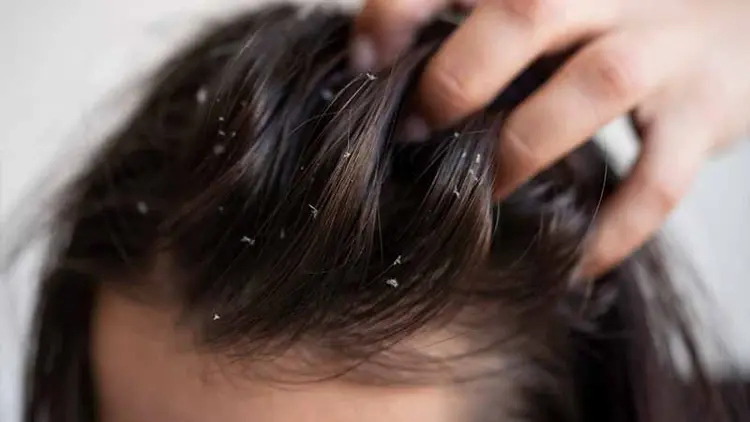
Tips for Preventing Dandruff and Itchy Scalp
Keeping dandruff and scalp itch under control isn’t just about using medicated shampoos — small daily habits can make a big difference:
Wash your hair regularly, but gently: Helps remove excess oil and dead skin without stripping natural moisture.
Use mild, sulfate-free shampoos: Harsh chemicals and heavy fragrances can irritate the scalp and trigger flaking.
Avoid scratching: Scratching might feel relieving, but it can damage scalp skin, worsen irritation, and lead to more flakes.
Eat a balanced diet: Foods rich in zinc, vitamin B, and omega-3 fatty acids support scalp health and help reduce inflammation naturally.
Protect your scalp from Extreme weather: Cover your head in very hot sun or cold wind to prevent dryness and irritation.
Manage stress: Stress often triggers or worsens dandruff, so activities like meditation, yoga, or even short breaks in your day can help.
By following these simple but effective tips, you can keep your scalp healthier, reduce itching, and lower the chances of dandruff coming back.
Conclusion:
Dandruff isn’t just a cosmetic issue — it affects scalp health and can indirectly lead to hair fall if neglected. Understanding the types of dandruff in hair, knowing how to remove dandruff, and addressing the root cause — whether fungal, oily scalp, or dry skin — can make a big difference.
For long-term relief, consider professional help like homeopathy treatment for dandruff along with lifestyle and hair care changes. And remember: a healthy scalp means healthier, stronger hair.