Skin allergies can be more than just a minor irritation—they can affect your comfort, confidence, and overall quality of life. Recurring rashes, redness, swelling, and dryness often return even after temporary treatments, leaving many people frustrated and searching for a lasting solution. Conventional options may suppress symptoms for a while, but they do not always address the deeper cause of the problem.
This is where homeopathy offers a holistic and long-term approach. By understanding your body’s unique response patterns and focusing on the root cause, homeopathic treatment helps manage persistent skin itching along with other allergic symptoms in a gentle and natural way. Instead of just calming the surface reaction, it works internally to strengthen the immune system, reduce hypersensitivity, and restore overall balance. With personalized remedies and careful evaluation, homeopathy aims to reduce the frequency and intensity of flare-ups over time. The result is safer, sustainable relief that supports healthier skin from within—without the risk of dependency or harsh side effects.
Understanding Skin Allergies
Skin allergies develop when the immune system reacts abnormally to certain triggers such as food, environmental factors, stress, or chemicals. Instead of protecting the body, this exaggerated immune response causes inflammation that becomes visible externally. Reactions may appear as redness, itching, swelling, dryness, rashes, or discoloration, ranging from mild irritation to severe discomfort that interferes with daily life.
Often, the body reflects internal health. When hypersensitivity occurs, even harmless substances like dust, pollen, certain fabrics, or personal care products can trigger persistent symptoms. Repeated flare-ups often indicate that the underlying imbalance has not been fully addressed.
This connection explains why such allergic reactions are not merely surface problems and why a deeper treatment approach is necessary for long-term results. Focusing only on visible symptoms may provide temporary relief, but understanding and correcting the root cause helps achieve more stable and lasting improvement.
Common Skin Allergy Causes
Identifying triggers is a crucial step toward effective and long-term recovery. Skin allergies often develop due to a combination of internal and external factors. Some of the most frequent skin allergy causes include:
1. Immune system imbalance
Either hypersensitivity or weakened immunity can cause the body to overreact to harmless substances.
2. Genetic factors
A family history of allergies, asthma, or skin disorders increases the risk of developing skin allergies.
3. Environmental exposure
Dust, pollen, pollution, smoke, cosmetics, detergents, and industrial chemicals can irritate the skin and trigger allergic reactions.
4. Food intolerance or sensitivity
Certain foods may provoke allergic responses that manifest on the skin, even without digestive symptoms.
5. Emotional stress and hormonal changes
Chronic stress, anxiety, puberty, pregnancy, or hormonal imbalance can worsen or trigger skin allergies.
6. Weather and climate changes
Extreme heat, cold, humidity, or sudden climate shifts can make the skin more reactive.
7. Poor gut health and digestion
An unhealthy digestive system can weaken immunity and contribute to recurring skin allergies.
8. Infections
Recurrent bacterial, viral, or fungal infections can sensitize the immune system and worsen allergic skin reactions.
9. Excessive use of chemical-based products
Long-term use of harsh soaps, creams, or steroid-based products may damage the skin barrier.
10. Lack of sleep and fatigue
Poor sleep weakens immune function, increasing susceptibility to allergic reactions.
Unless these factors are corrected internally, symptoms are likely to recur despite repeated skin allergy treatment.
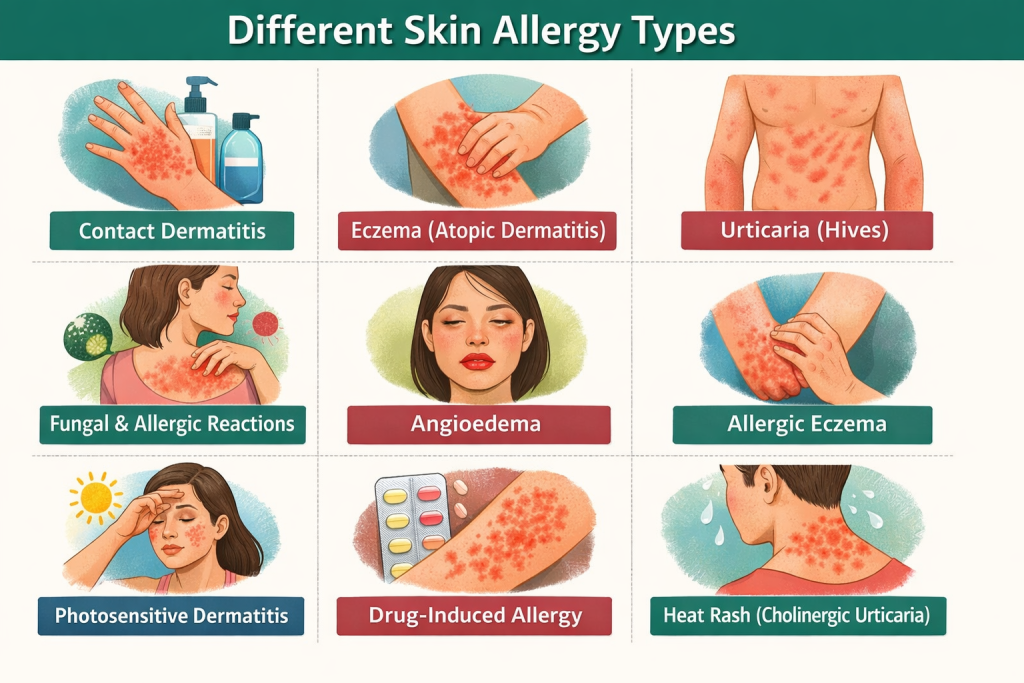
Different Skin Allergy Types
There are several skin allergy types, and each behaves differently depending on the trigger, immune response, and individual sensitivity. Identifying the correct type is essential for effective management and long-term relief.
1. Contact dermatitis
An allergic reaction that occurs after direct contact with irritants such as soaps, detergents, metals, cosmetics, or chemicals.
2. Eczema (Atopic dermatitis)
A chronic condition marked by dry, inflamed skin, intense itching, and recurring flare-ups, often linked to immune imbalance and genetic factors.
3. Urticaria (Hives)
Sudden, itchy, raised welts that may appear due to food, medication, infections, stress, or environmental allergens.
4. Fungal and allergic skin reactions
A combination of fungal infection and allergic sensitivity, causing persistent itching, redness, and discomfort.
5. Angioedema
Deep swelling under the skin, often affecting the lips, eyes, face, or throat, usually associated with allergic reactions.
6. Allergic eczema
Triggered by exposure to specific allergens, leading to inflammation, itching, and skin thickening over time.
7. Photosensitive dermatitis
An allergic reaction triggered by exposure to sunlight, often worsened by certain medications or chemicals.
8. Drug-induced skin allergy
Allergic reactions caused by certain medications, appearing as rashes, redness, or itching.
9. Heat rash (Cholinergic urticaria)
Small, itchy bumps caused by sweating or increased body temperature.
Understanding skin allergy types and treatment together is essential, as generalized medicines rarely work for all conditions. A personalized approach ensures the treatment targets the root cause rather than just suppressing visible symptoms.
Why Conventional Treatments Often Fall Short
Conventional treatments mainly aim to control visible symptoms rather than address the underlying cause. Although they may quickly reduce redness or itching, the relief is often temporary. Common limitations include:
- Suppressing symptoms without correcting the cause — The underlying trigger remains, so allergies can return.
- Possible dependency with long-term use — Relief may depend on continued medication.
- Rebound flare-ups after stopping treatment — Symptoms can come back once medicines are discontinued.
- Worsening skin pigmentation over time — Repeated inflammation or strong treatments may darken the skin.
This cycle can delay true healing and limit the effectiveness of long-term skin allergy treatment.
How Homeopathy Helps in Skin Allergy
Homeopathy addresses skin allergies by focusing on the internal imbalance that triggers hypersensitive reactions rather than only treating surface symptoms. It works on the principle of individualized care, where remedies are selected based on the person’s specific symptoms, triggers, and overall health pattern. Homeopathic care helps by:
- Regulating the overactive immune response
- Reducing sensitivity to allergens and triggers
- Relieving skin itching, redness, and inflammation naturally
- Supporting the body’s self-healing mechanism
- Decreasing the frequency and severity of flare-ups
With consistent treatment and proper guidance, homeopathy can contribute to long-term stability, making it a supportive option for managing both acute reactions and chronic skin allergy conditions.
Why Personalization Matters in Skin Allergy Treatment
No two individuals react the same way to allergens. Factors such as immune strength, genetic tendency, lifestyle, stress levels, and environmental exposure influence how the body responds. In homeopathy, skin allergy types and treatment are always personalized to match these individual differences rather than following a one-size-fits-all approach. Personalization considers:
- Individual triggers and sensitivity patterns
- Overall physical health and immunity
- Emotional stress and lifestyle factors
- Past medical and allergy history
- Environmental influences affecting the skin
Two patients with similar rashes may receive different remedies based on their overall health, triggers, emotional state, and history of allergies. This detailed evaluation helps identify the underlying imbalance responsible for recurring symptoms. Such individualized care increases effectiveness and ensures that skin allergy treatment targets the true cause rather than offering only short-term comfort. Over time, this approach supports deeper healing, reduces recurrence, and promotes healthier, more resilient skin.
Role of Expertise in Homeopathic Skin Care
Successful outcomes depend on accurate case evaluation and clinical experience. An experienced practitioner like Dr Ankur Prakash focuses on detailed patient-specific analysis and evidence-based homeopathic care rather than a generalized approach. Careful assessment of symptoms, triggers, medical history, and overall constitution helps in selecting the most appropriate remedy.
This level of expertise strengthens patient trust, improves treatment precision, and aligns well with EEAT principles of experience, expertise, and credibility. It also ensures that changes in symptoms are monitored closely and remedies are adjusted when needed for better long-term results. With proper professional guidance, skin allergy treatment becomes more structured, consistent, and reliable, increasing the chances of lasting relief and healthier skin over time.
Frequently Asked Questions (FAQs)
Can a skin allergy be cured permanently?
In many cases, yes. When the root cause is addressed through individualized homeopathic care, long-term relief and reduced recurrence are possible.
Is homeopathy good for skin problems?
Yes. Homeopathy is widely used for chronic skin conditions because it treats internal imbalance rather than masking symptoms.
What to avoid during homeopathy?
Avoid self-medication, excessive use of steroid creams, and known allergens. Following your doctor’s advice improves treatment outcomes.
Do homeopathic allergy medicines work?
Yes. When prescribed correctly, they help regulate immune responses and gradually reduce allergic sensitivity.
Final Thoughts
Skin allergies require patience, understanding, and the right approach. By addressing immune imbalance, identifying personal triggers, and healing from within, homeopathy offers a safe and sustainable solution. Under proper care—such as guidance from Dr Ankur Prakash—long-term relief is not just possible but achievable.
Disclaimer
The information provided in this blog is for educational purposes only and is not a substitute for professional medical advice, diagnosis, or treatment. Skin allergy conditions and responses to homeopathic treatment may vary from person to person. Always consult a qualified healthcare professional or homeopathy doctor before starting or changing any treatment. In case of severe symptoms or medical emergencies, seek immediate medical attention.